Find the language for your tattoo idea
Start with the marks you like: a delicate contour, a solid silhouette or a wash of color. These guides explain how each style shapes an idea, with prompts you can adapt before creating a concept.
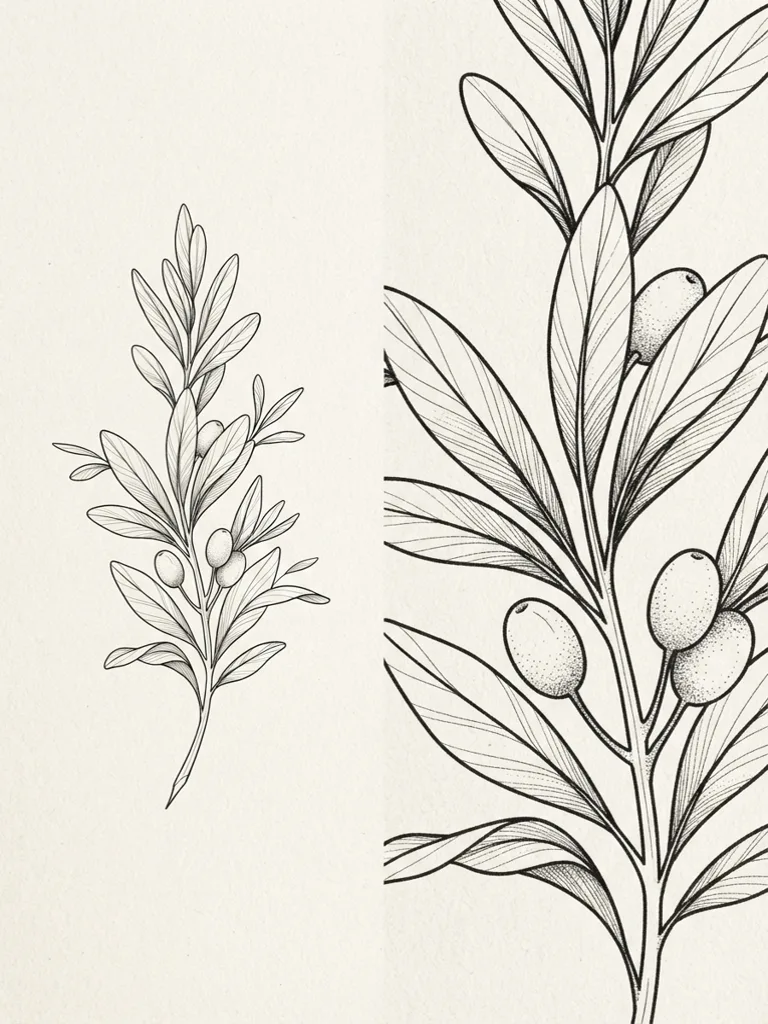
Fine line
Fine line puts the contour first. Thin, deliberate strokes describe a subject without heavy outlines or large solid fills. Botanical stems, small objects and simple silhouettes are useful subjects because their defining features can be expressed with relatively few marks.
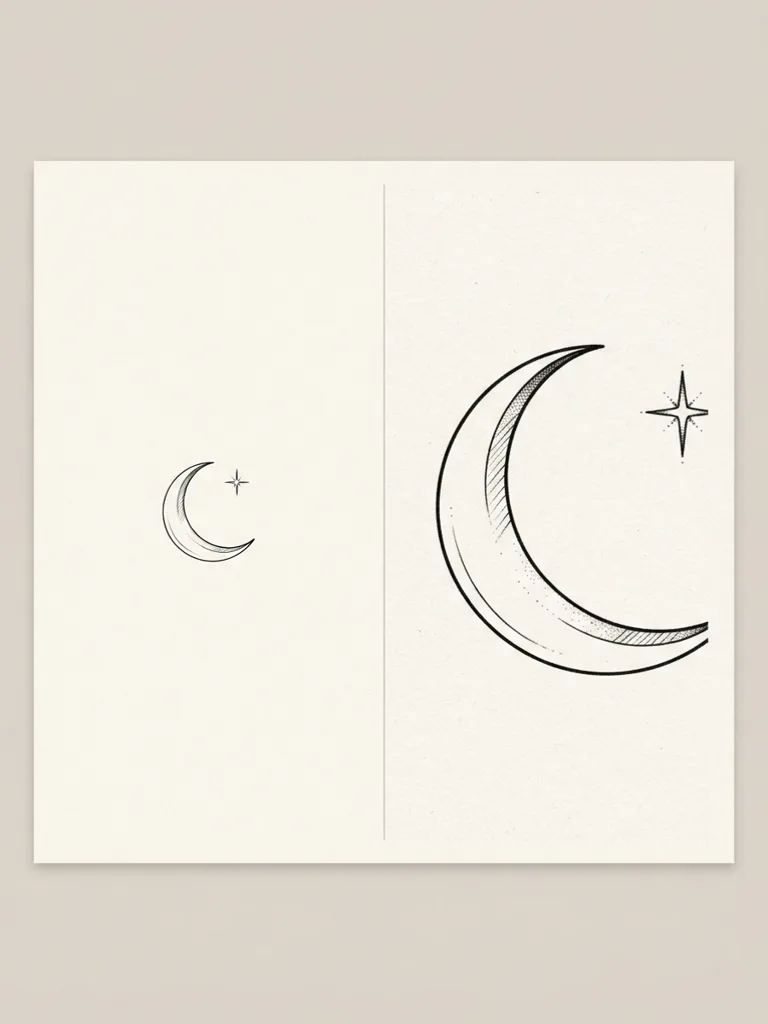
Minimalist
Minimalist designs reduce a subject to the parts needed to recognize it. The result might be a single outline, a compact symbol or a pair of balanced forms. The point is not simply to make the image small, but to decide what can be left out.
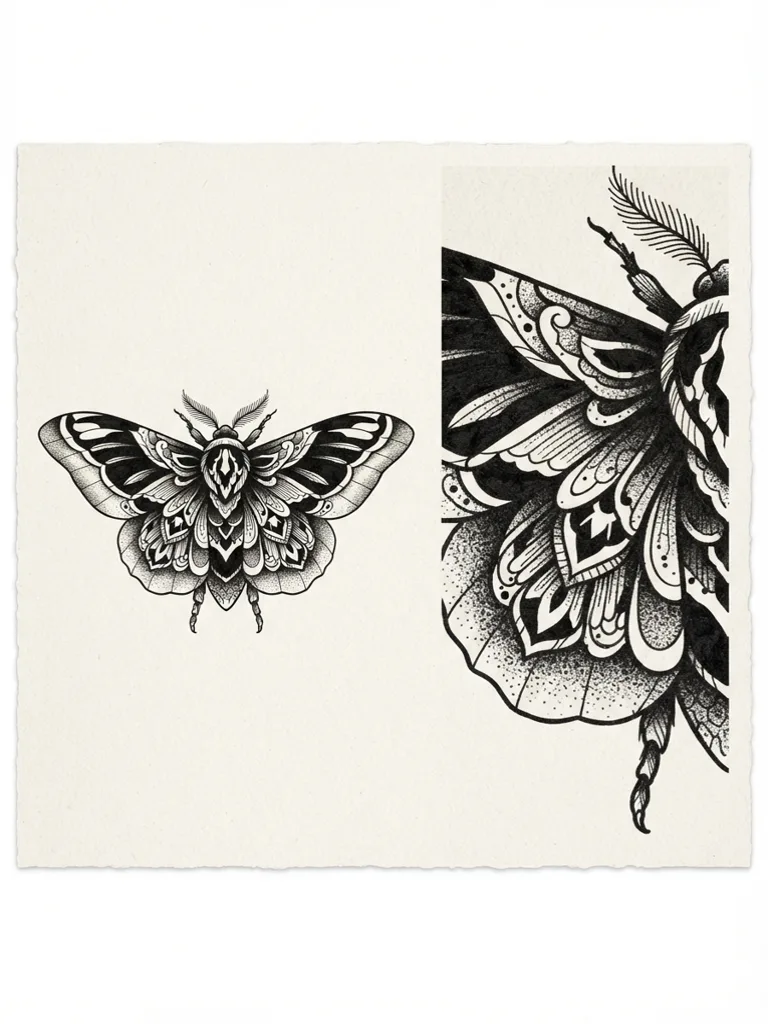
Blackwork
Blackwork builds an image with black ink and the spaces left between it. Solid shapes, cutout details and strong contrasts often matter more than subtle tonal modeling. Subjects with a recognizable silhouette can work as starting points for this graphic approach.
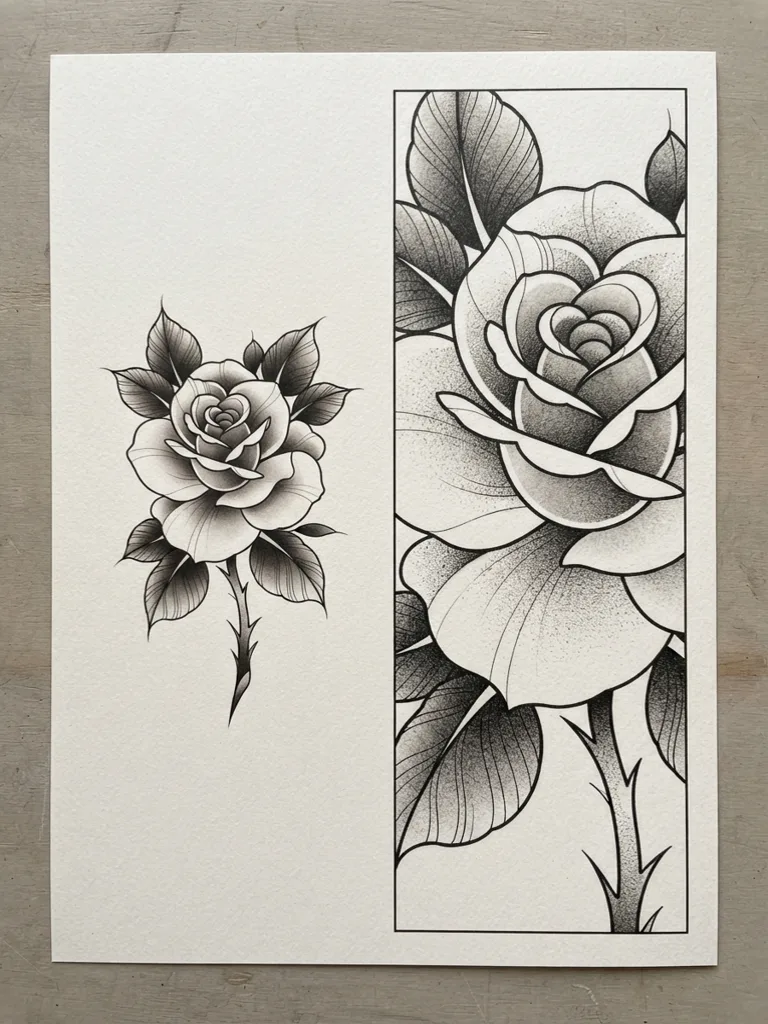
Black and grey
Black and grey uses tonal changes rather than colored ink to separate forms. It can describe soft petals, sculptural objects or illustrative subjects. Unlike solid blackwork, the transition between light and dark is an important part of how the image reads.
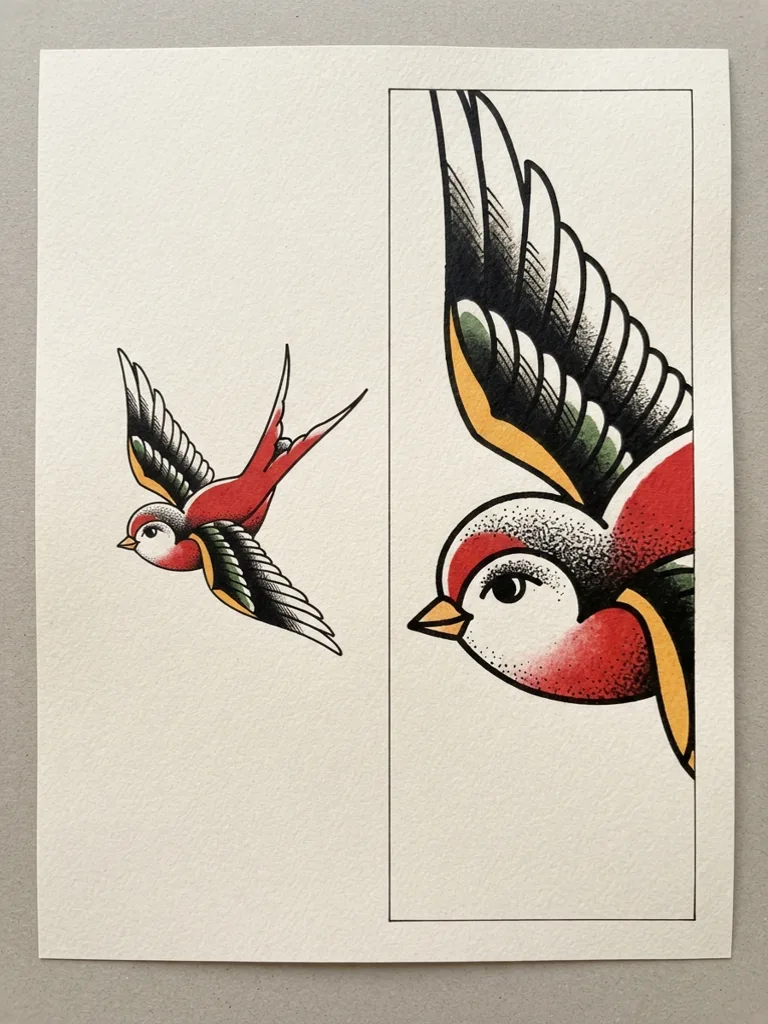
American traditional
American traditional designs emphasize strong outlines, simplified forms and a limited palette. A subject is usually readable without intricate surface detail. Swallows, roses and nautical objects offer starting points, but you can also apply this visual approach to a personal subject.
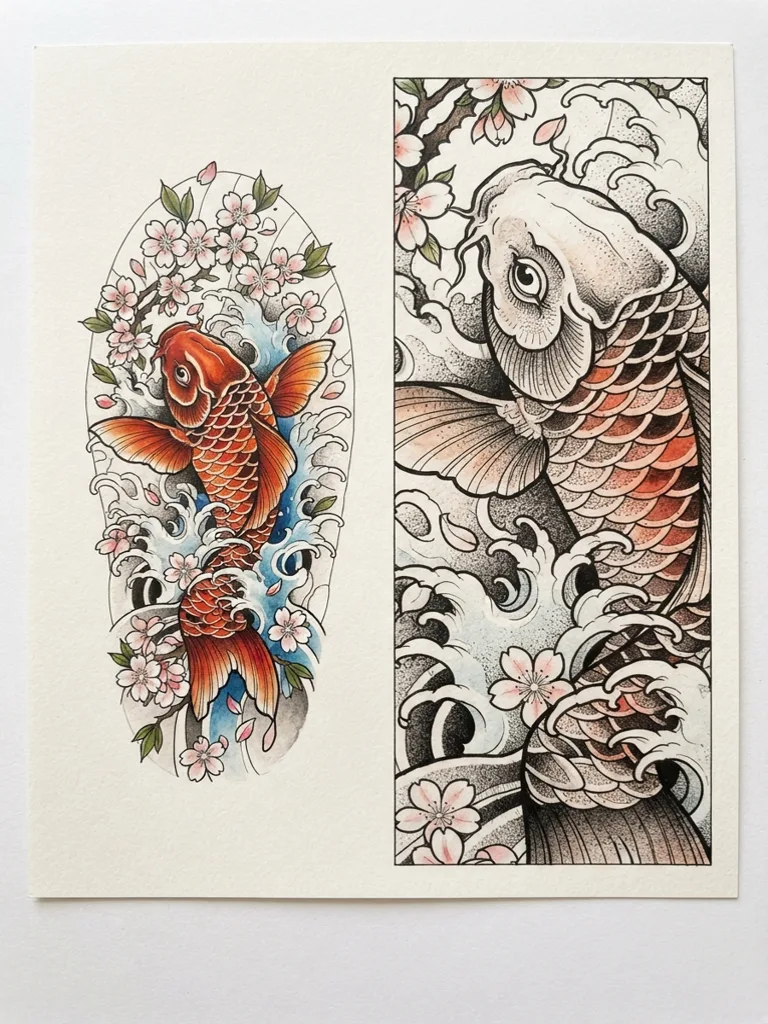
Japanese-inspired
Japanese-inspired concepts use directional movement and relationships between the main subject and surrounding shapes. A koi, flower or wave should feel part of a composition rather than a collection of unrelated symbols. These guides offer visual starting points, not a substitute for cultural or artistic expertise.
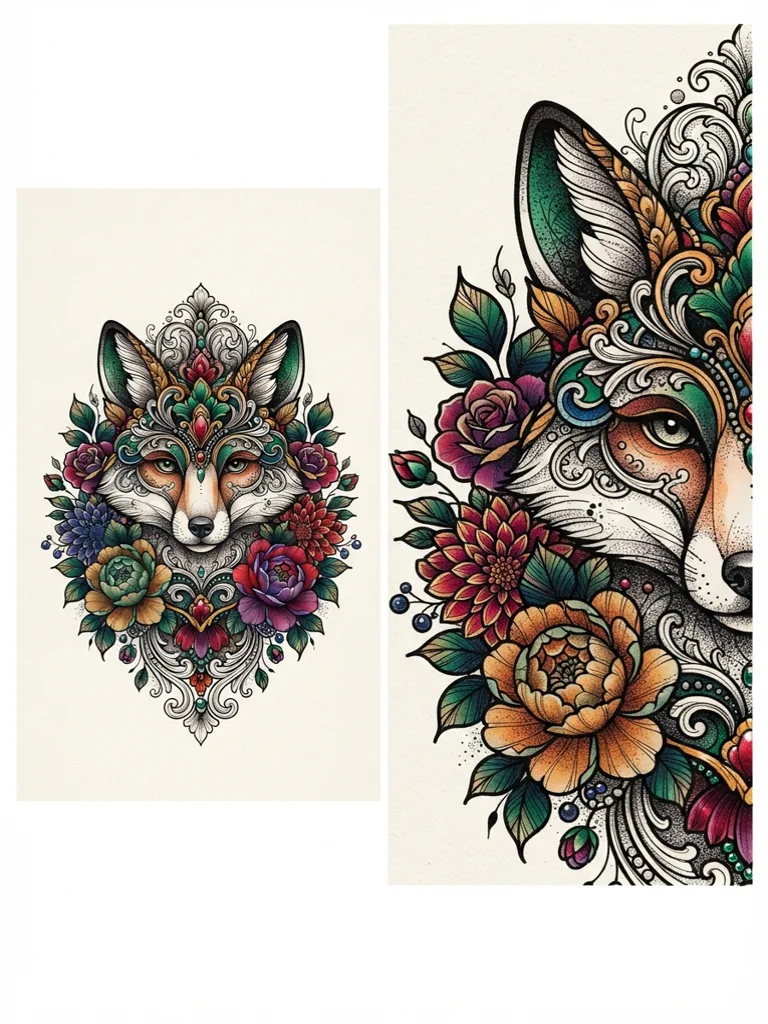
Neo-traditional
Neo-traditional keeps a strong outline while opening up room for decorative detail, varied line weights and a broader color palette. Animal portraits and botanical frames can become expressive illustrations rather than literal reproductions of a photograph.
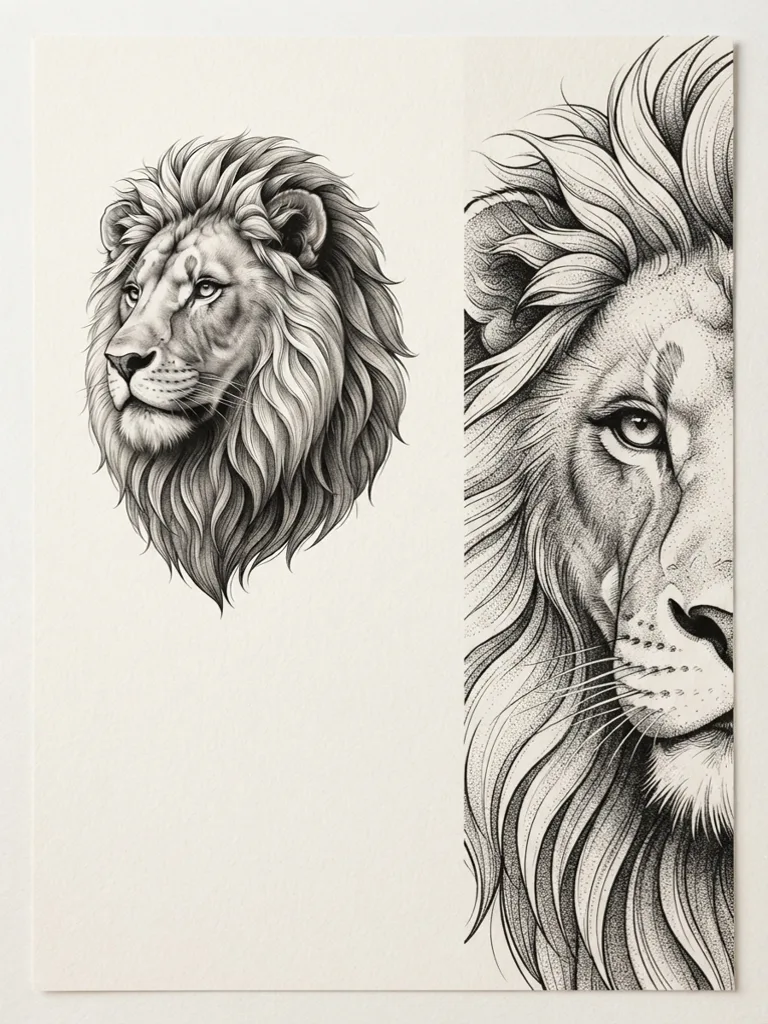
Realism
Realism aims to describe believable form through proportion, lighting and texture. It asks different questions from a symbolic outline: where is the light, which plane faces the viewer, and which details make the subject recognizable? A clear reference is more useful than an overloaded description.
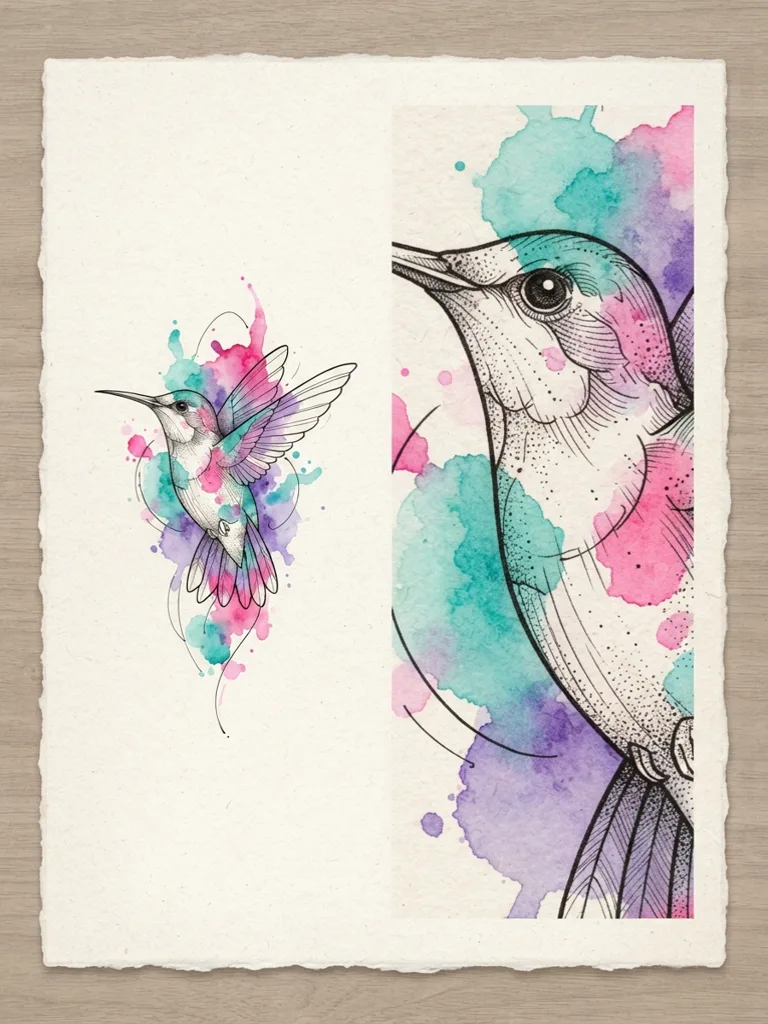
Watercolor
Watercolor-inspired designs suggest diluted pigment, soft edges and overlapping color washes. The interest comes from the relationship between a recognizable subject and looser color around it. A digital wash is a visual reference, not a literal prediction of how ink will look on skin.
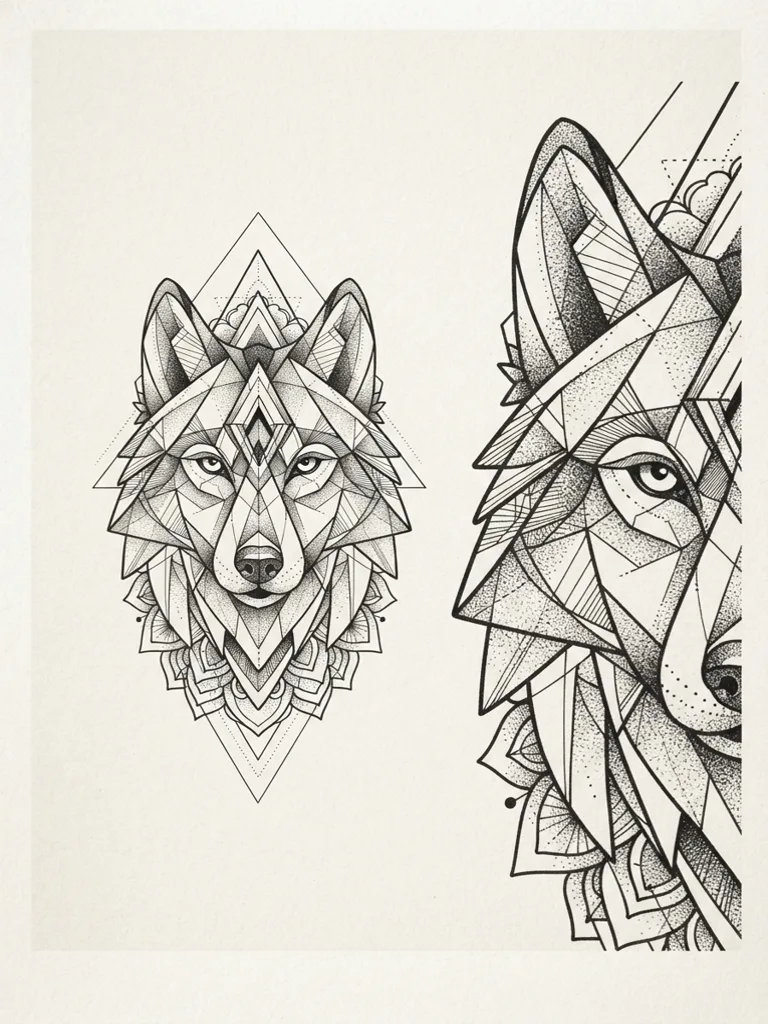
Geometric
Geometric designs organize an image around shapes, intervals and relationships. Circles can frame a subject, polygons can simplify its surfaces, and repeated lines can create rhythm. A successful brief identifies the structural rule instead of merely asking for more geometry.
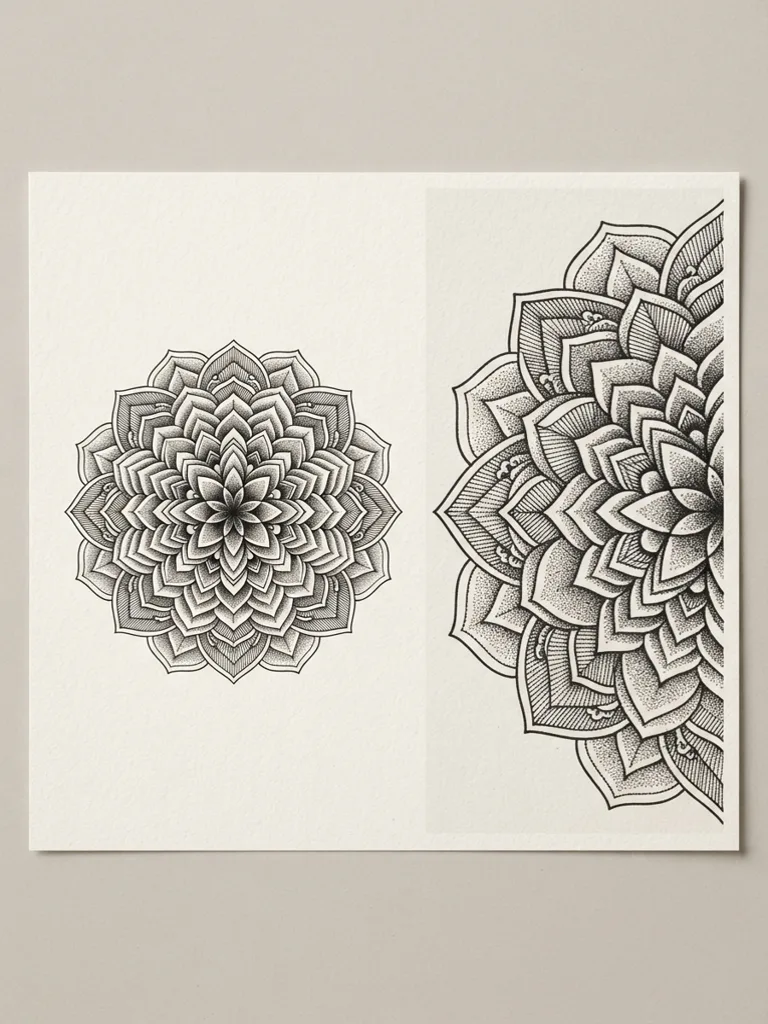
Dotwork
Dotwork creates tone and texture through the spacing of individual dots. Dense clusters read as darker areas while sparse points keep the surface light. It can accompany a geometric pattern, outline a natural form or become the main texture of an otherwise simple image.
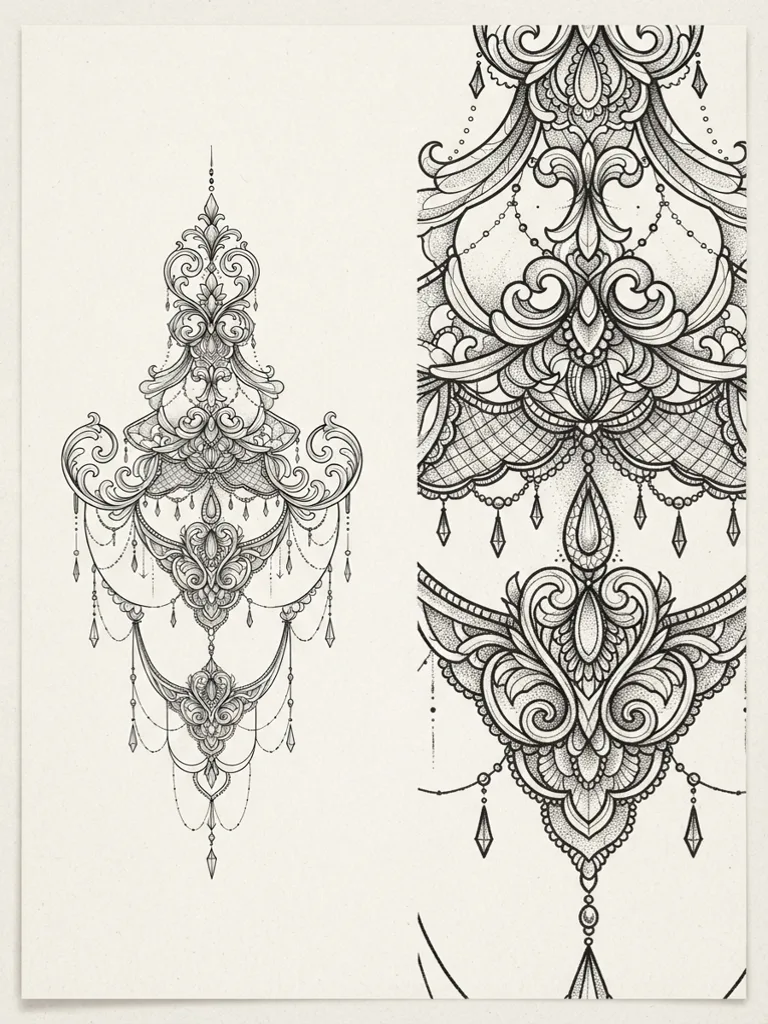
Ornamental
Ornamental designs put decoration and flow at the center of the image. Repeating curves, pointed forms and pendant-like shapes can frame an area without depicting a specific object. The relationship between a central motif and its surrounding space is often the main design decision.
AI Tattoo produces design concepts, not tattoo-ready instructions. Review line spacing, placement, scale and practical execution with a tattoo artist before committing to a design.