Dotwork tattoo ideas
Dotwork creates tone and texture through the spacing of individual dots. Dense clusters read as darker areas while sparse points keep the surface light. It can accompany a geometric pattern, outline a natural form or become the main texture of an otherwise simple image.
Create in this stylePlan the composition
Describe a clear transition from dense to sparse rather than requesting dots everywhere. Keep the subject's edge distinct from the stippled shadow. At small preview sizes dots can merge visually, so use the output to discuss texture and spacing instead of treating every generated dot as an instruction.
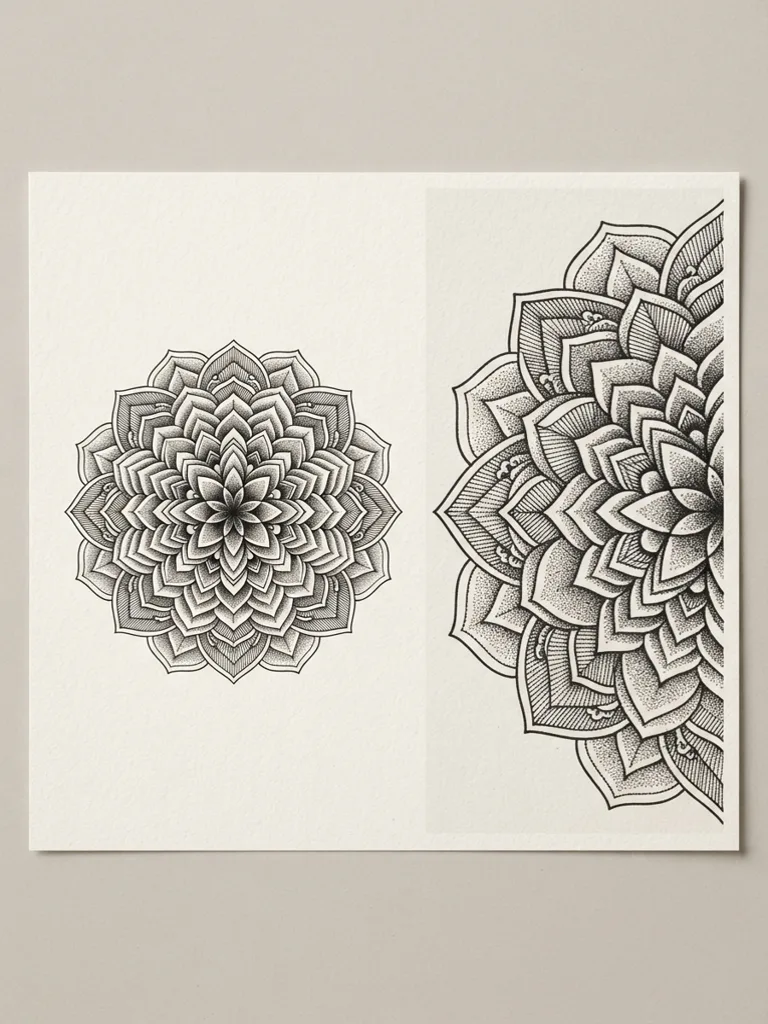
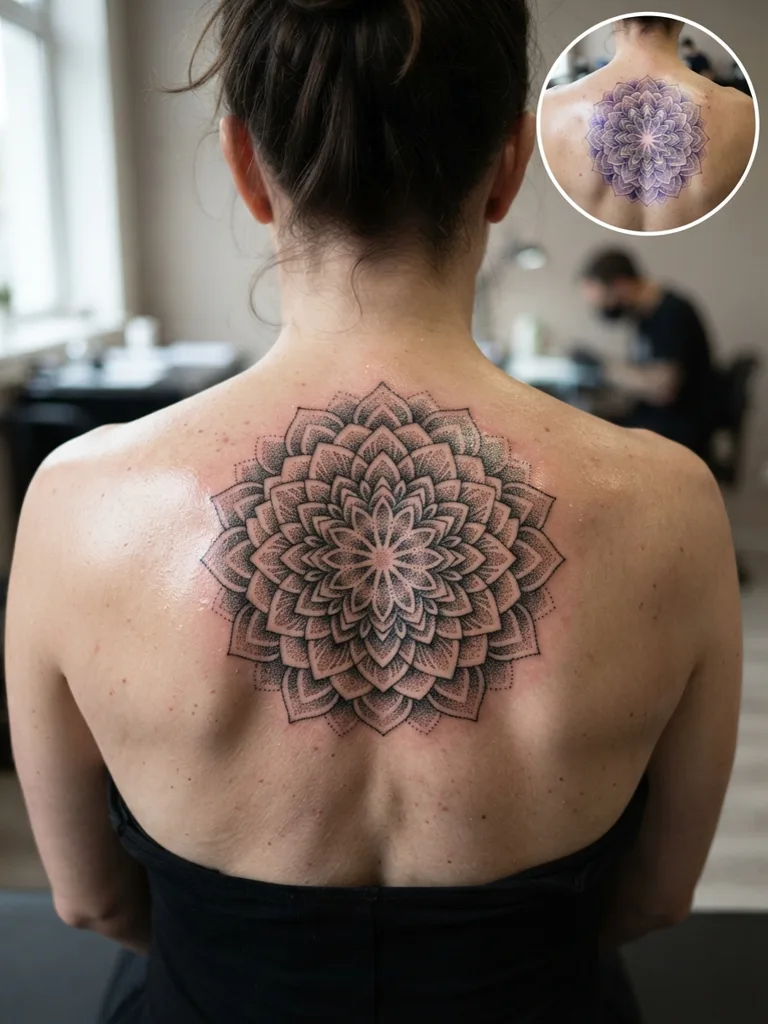
A prompt to start from
A crescent moon with a single hanging star, dotwork tattoo concept, distinct black stipple dots grading from dense along the outer curve to sparse inside, crisp silhouette and generous white gaps, no grey airbrush effect.Try this prompt
More prompts to adapt
A crescent moon rendered entirely in stippling, dotwork tattoo concept, dense dots along one edge thinning gradually across the form, no outline, no solid fill, even dot spacing, centred on white.Try this prompt
A simple geometric triangle with a stippled gradient inside it, dotwork tattoo concept, clean outline, dots densest at the base and opening toward the apex, no grey wash, vertical composition on white.Try this prompt
What drives the time and cost
Priced in hours, and the hours are real. Shading with individual dots is among the slowest ways to put tone on skin, and a palm-sized area of graded stippling can fill a session by itself. The dot density you like is the number that sets the price, so it is worth agreeing on it from a sample rather than a word.
Prices depend on the artist, the city and the piece, so none are quoted here. This is about what makes this style quick or slow, so you can read a quote instead of guessing at one.
How to read a portfolio for this style
Look at healed gradients for even dot spacing. Clumping shows up as blotches once the skin has settled, which is invisible in a fresh photograph. The transition from dense to sparse should feel continuous rather than stepped into bands.
Placement and scale
Dot density is what you are choosing, and density needs area. A gradient made of dots needs enough span for the eye to read it as a gradient rather than as texture, so upper arm, thigh, back and chest suit it. Small dotwork tends to behave like a solid grey from a normal viewing distance, which may be fine, but it is worth knowing that is what you are buying.
How it ages
Dots spread like any other ink, and the sparse end of a gradient is where that shows. Dots placed far apart stay separate, dots placed close begin to join, and a gradient can slowly turn into a flat tone from its dark end inward. Asking for a slightly more open stipple than looks ideal now is the usual way to keep the gradation readable.
What follows is about how a drawing is built, not about healing or aftercare. How your skin takes and keeps ink is a question for the artist who will do the work.
Questions before you create
Dotwork or black and grey shading?
Both make tone, by different means and at very different speeds. Dotwork builds it from separate points, which is slower and gives a textured, granular surface. Black and grey builds it from washes, which is quicker and smoother. Choose dotwork if the texture is part of what you want, not simply because you want something to look hand-made.
What should I ask for if the result looks like smooth grey shading?
Specify visible, separate stipple dots and exclude airbrushed gradients. Reduce surface detail so the texture has room to read. The image may still need an artist's reinterpretation; the generator does not provide a dot-by-dot application plan.
Can I take the generated image straight to a tattoo appointment?
Use it as a conversation reference. An artist needs to review the drawing, adapt it to your body and intended size, and decide how to translate its lines and shading into tattoo work. A generated image is not a guarantee of a workable stencil or healed result.
Does opening the generator start a paid generation?
No. The link selects this style, and the prompt link also fills in the example text. You can edit both before choosing Generate. The generator shows the selected model and credit cost; normal sign-in and credit requirements still apply.
AI Tattoo produces design concepts, not tattoo-ready instructions. Review line spacing, placement, scale and practical execution with a tattoo artist before committing to a design.