Dotwork or Blackwork?
From a distance these can look like the same tattoo. Up close they are opposites. Blackwork lays down continuous solid ink and the image comes from its outline against bare skin. Dotwork never fills anything: tone is built from separate points, and the surface stays granular no matter how dense it gets. The choice is whether you want a flat graphic or a textured one, and it is worth deciding deliberately rather than by which portfolio you saw first.
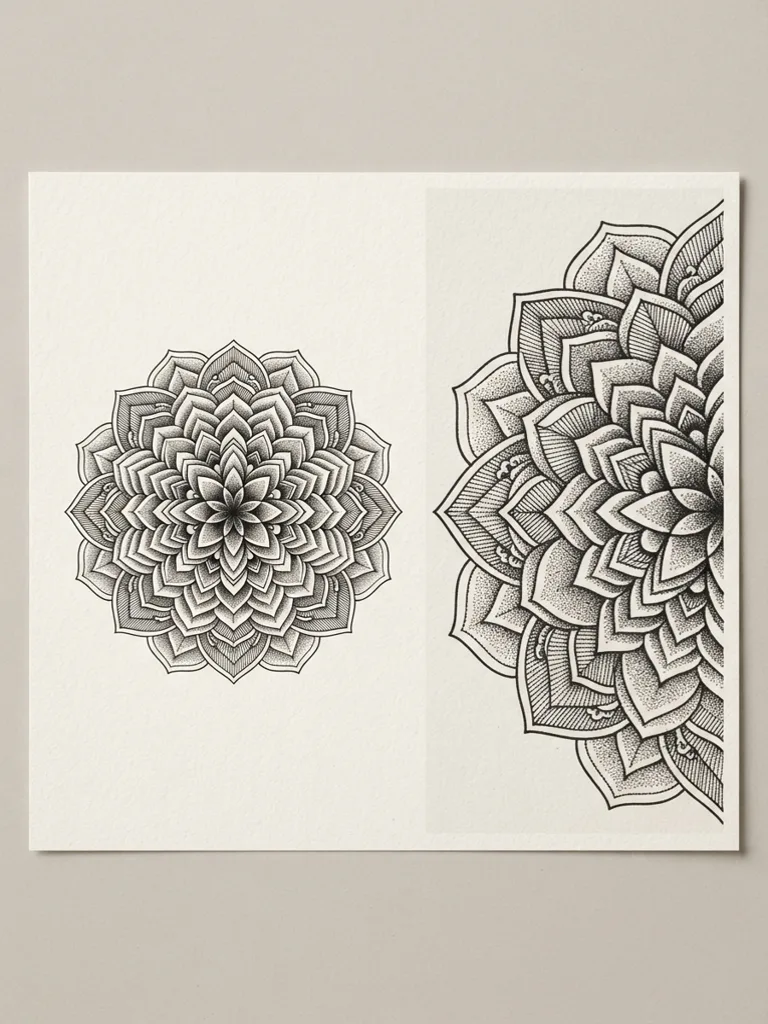
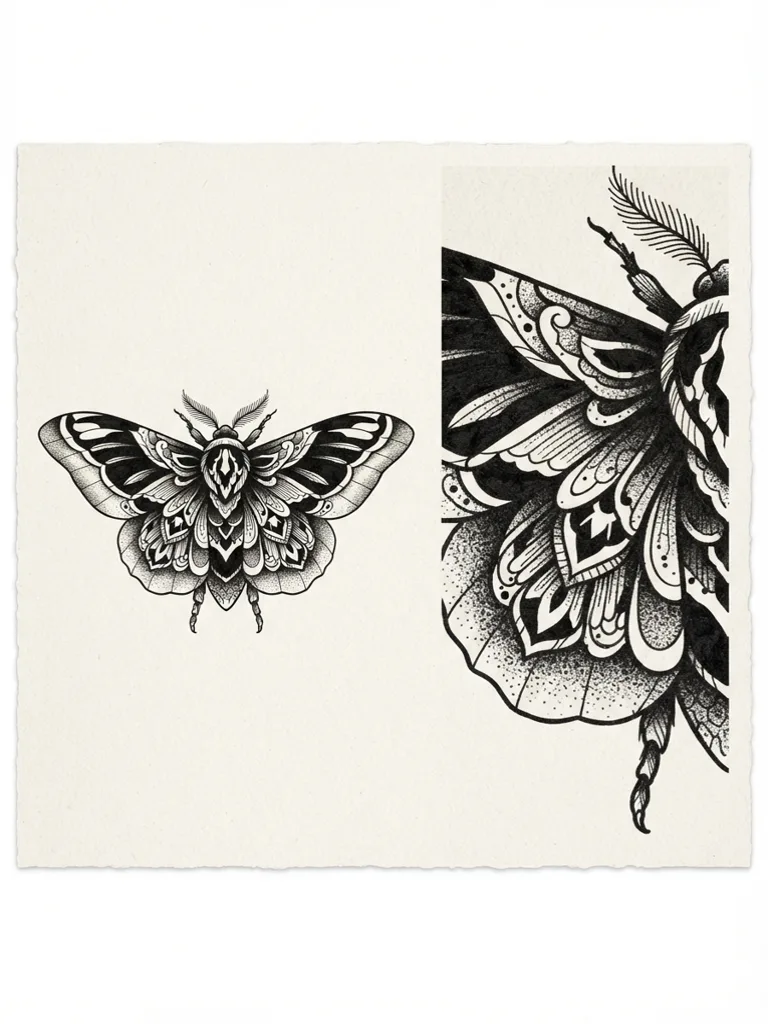
Side by side
| What you are comparing | Dotwork | Blackwork |
|---|---|---|
| Surface | Granular; individual points remain visible | Flat and continuous |
| How tone is made | By spacing dots further apart | There is no tone; only ink or no ink |
| Time in the chair | Among the slowest; priced in hours | Faster per area, but large fills still take sittings |
| What changes over time | Close dots join; a gradient flattens from its dark end | Edges soften; the gaps you left narrow |
Which to ask for
Ask for dotwork if the texture is part of what you want, or if you need a tone that sits between black and bare skin without using grey wash. Ask for blackwork if you want a flat, graphic statement and want it finished sooner. Do not choose dotwork only because it looks hand-made; you will be paying for those hours.
These are directions for describing what you want, not rules every artist follows. Bring both names to your consultation and let the artist tell you which one fits your subject and placement.
AI Tattoo produces design concepts, not tattoo-ready instructions. Review line spacing, placement, scale and practical execution with a tattoo artist before committing to a design.