Blackwork or Black and grey?
Both use black ink and that is where the similarity ends. Blackwork has no middle tone: there is solid ink, there is bare skin, and the image is made from the border between them. Black and grey has nothing but middle tone, built from a full range of greys so a form can turn and recede. The question is not which looks better. It is whether your subject is recognisable as a flat shape or depends on volume to be read at all.
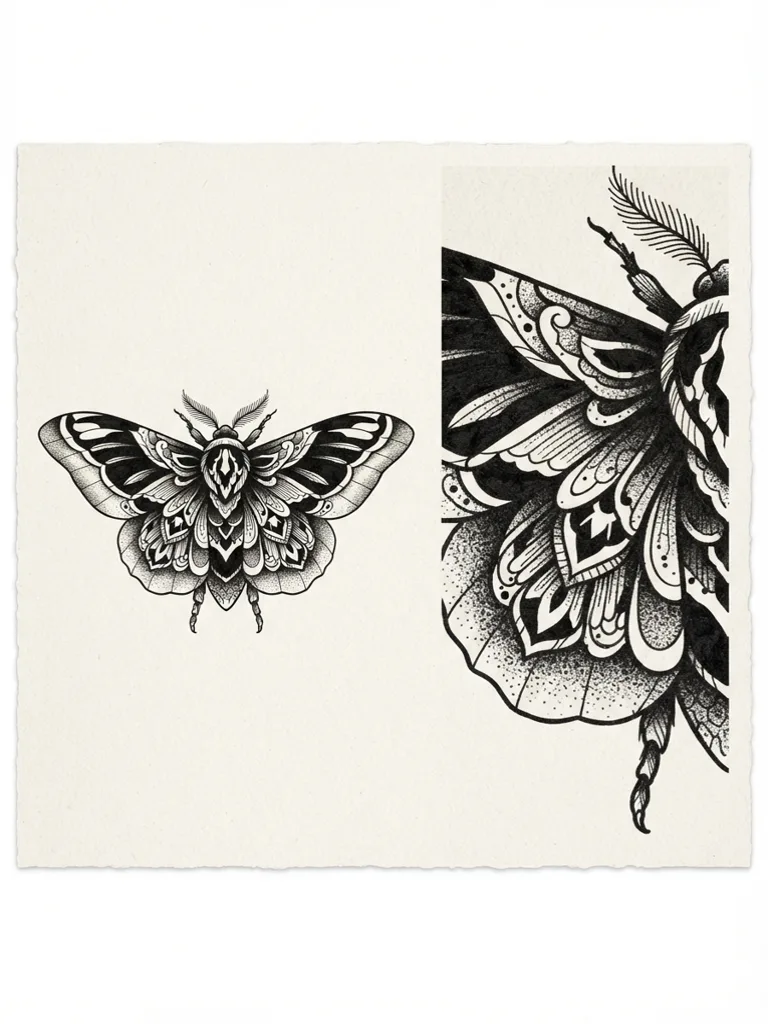
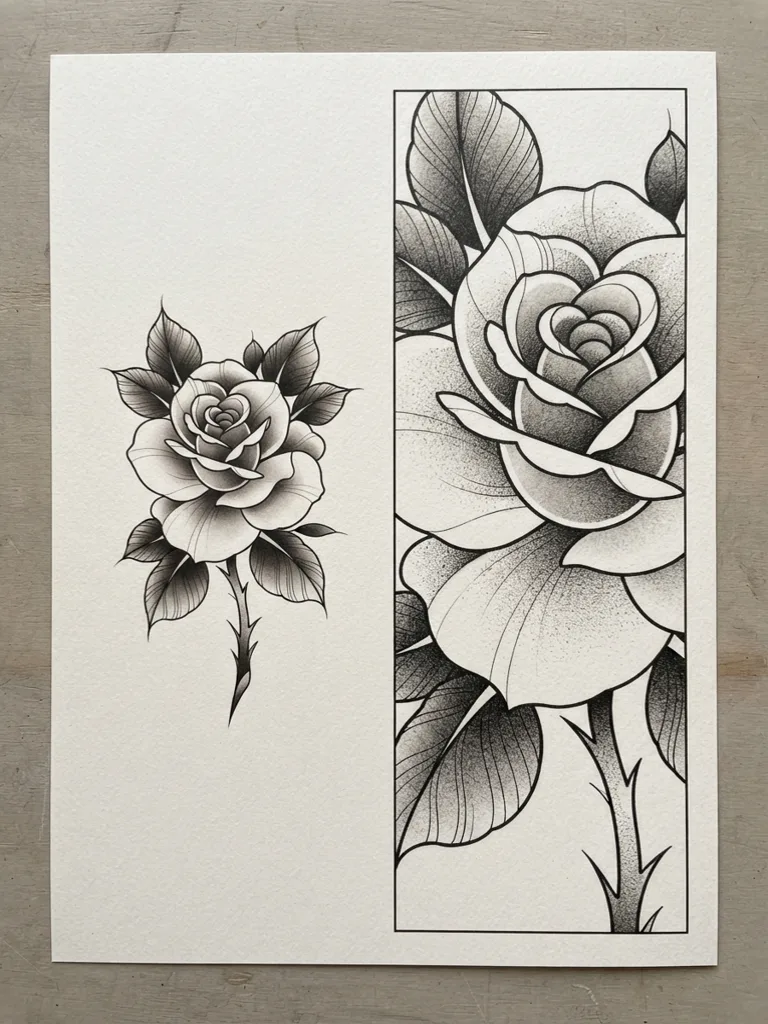
Side by side
| What you are comparing | Blackwork | Black and grey |
|---|---|---|
| Tonal range | Two values: solid black and bare skin | A continuous range from black to untouched skin |
| Subjects it suits | Anything with a strong silhouette | Anything that needs volume: faces, fabric, fur |
| Behaviour at small sizes | Negative space closes and the shape becomes a blob | Gradients compress into a flat grey smudge |
| What changes over time | The edges move; the gaps you left narrow | Mid-greys drift together; contrast is what buys time |
Which to ask for
Ask for blackwork if you can describe your subject as a shape and the shape alone would be recognised. Ask for black and grey if describing it requires words like depth, roundness or lighting. If you want a face, you want grey, however much you like the look of solid black.
These are directions for describing what you want, not rules every artist follows. Bring both names to your consultation and let the artist tell you which one fits your subject and placement.
AI Tattoo produces design concepts, not tattoo-ready instructions. Review line spacing, placement, scale and practical execution with a tattoo artist before committing to a design.